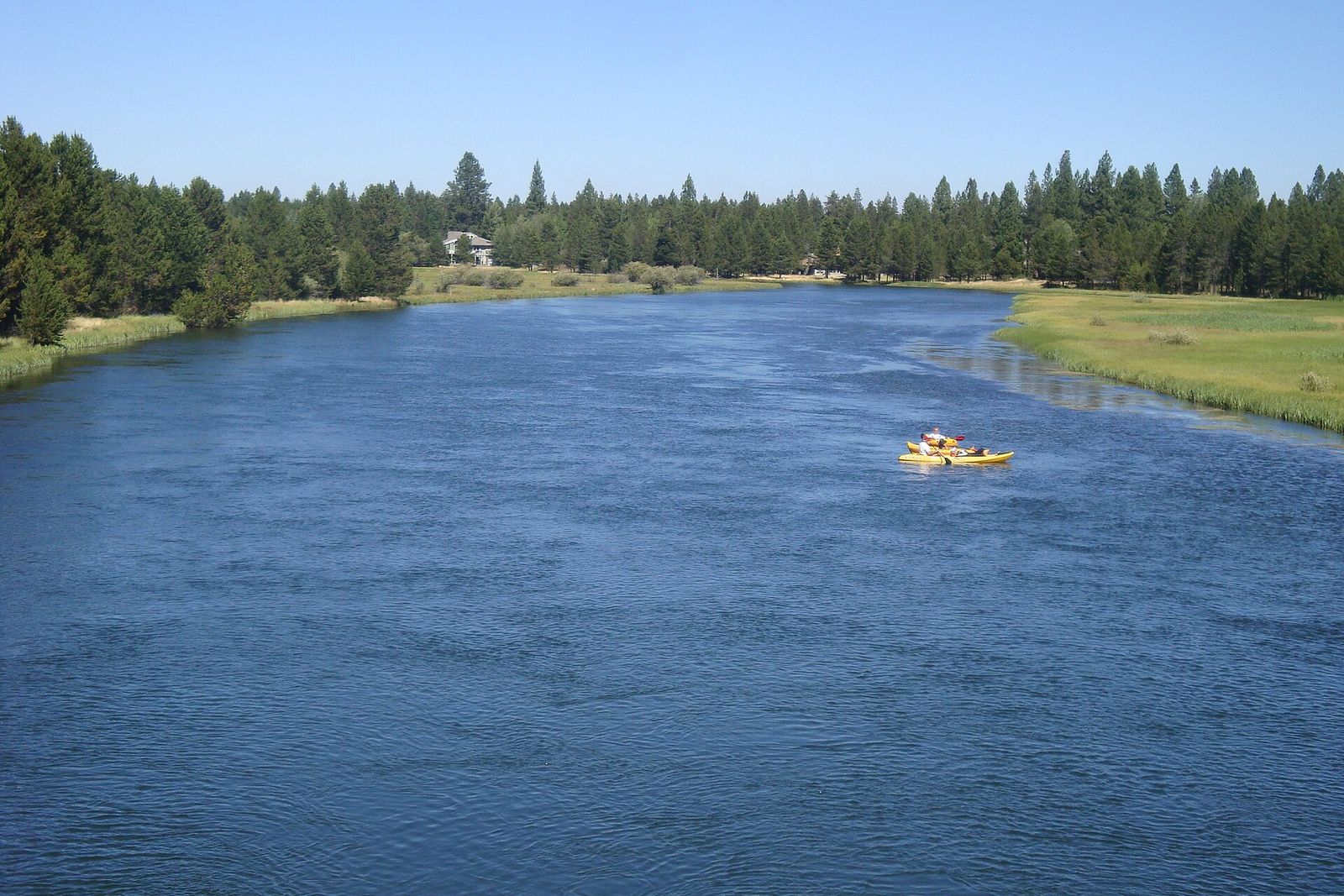
The classic Sunriver float puts in at Harper Bridge, just outside Sunriver, and takes out at the free Sunriver canoe and kayak takeout downstream: about 8.6 miles of the Deschutes River and 3 to 5 hours on the water. For something much shorter, our hidden-gem pick is Besson day use, where the river bends into a horseshoe so you can put in, float 10 to 15 minutes, and take out in one spot.
A float is one of the summer days we recommend most. Here’s what we tell guests before they pump up a tube or rent a kayak: where to get on, where to get off (the part that really matters), where to rent, what Oregon requires, and how to keep a lazy river day lazy.
What is the Harper Bridge float?
Harper Bridge carries Spring River Road over the Deschutes, just west of where that road splits off South Century Drive, a few minutes’ drive from Sunriver. The public put-in is on the south side of the river. From there the Deschutes carries you north toward Sunriver. The Sunriver Area Chamber of Commerce rates this area as Class 1 moving water: riffles, minor waves, and minimal obstructions. Relaxing, but the chamber also warns that the current can be deceptively swift.
The Sunriver Owners Association puts Harper Bridge to the canoe takeout at 8.6 miles and 3 to 5 hours, which matches what we tell our own guests. Your pace depends on your craft and how much you paddle, so pad the afternoon rather than racing the clock.
Two things to know about this route:
- You’ll pass the Sunriver Marina on the way. It’s a commercial facility for the resort’s rental customers, and the owners association is clear that launching or taking out on private land, private docks, or marinas counts as trespassing. On your own gear, plan to float all the way to the canoe takeout.
- There’s a short version. Harper Bridge to Besson day use is 1.8 miles, about 45 minutes by the chamber’s estimate: a good first float for younger kids.
Parking at the bridge is limited, and in peak summer cars line Spring River Road, so arrive early.
Where is the Sunriver canoe and kayak takeout?
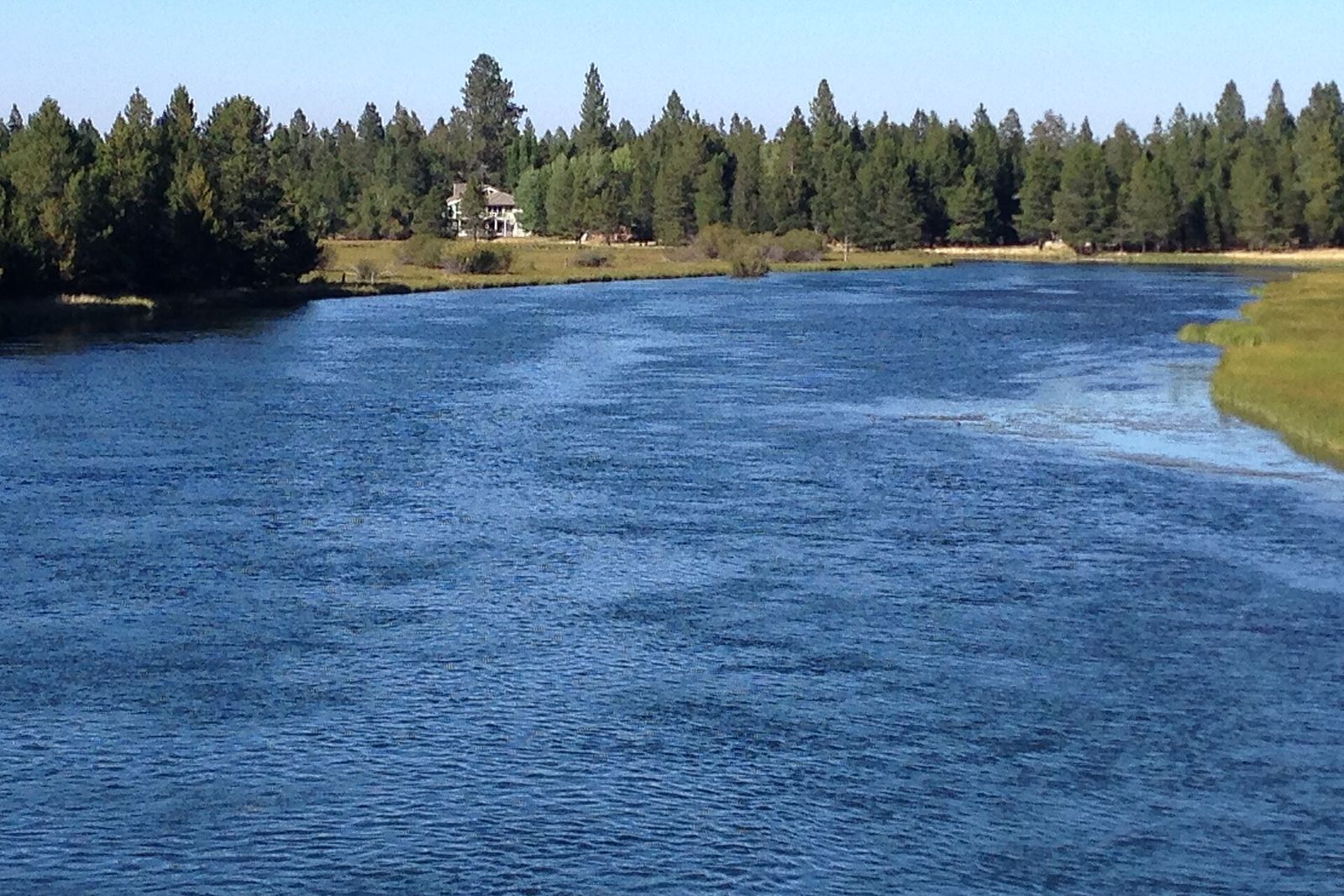
The Sunriver canoe takeout, used by canoes, kayaks, paddle boards, and tubes alike, sits at the end of Forest Road 600, at the north end of Sunriver near Benham Butte. It’s free, and it’s where we send guests to finish the Harper Bridge float.
Please read this part twice. The owners association states it plainly: the Sunriver Canoe Takeout and the Benham Falls East Trailhead area are the last takeout points, beyond them is Benham Falls, and all floaters must exit before the falls. Pin the takeout on your phone map before you launch, and once you pass the marina, start watching for it. Benham Falls is spectacular, and it’s best seen from the trail; it’s on our attractions guide as a bike ride or a walk.
How does the Besson horseshoe float work?
This is our hidden gem. At Besson day use, the Deschutes forms a horseshoe: you put in, float 10 to 15 minutes around the bend, and take out in one spot. No shuttle, no second car, no watching the clock. It’s our favorite answer for little kids, first-time floaters, and anyone who wants a picnic with a little river mixed in.
The Forest Service describes Besson as a small picnic area on the Deschutes with a boat ramp, a vault toilet, and picnic tables. It’s day use only, and each vehicle needs a recreation pass (a day pass, a Northwest Forest Pass, or an interagency pass); check current fees on that page. To get there from Sunriver, head west on County Road 42 across the river, go north about half a mile on Forest Road 41, then turn right on Forest Road 200 for about a mile.
Where can I rent a kayak, canoe, paddle board, or tube in Sunriver?
Sunriver Marina. The resort’s marina rents canoes, kayaks, stand-up paddle boards, and rafts for a six-mile float from the marina to Benham Butte. Every boat rental includes life jackets, paddles, and a shuttle back to the marina. In June, July, and August it also runs a three-mile tube float: the team shuttles you to Harper Bridge and you float back to the marina, river conditions permitting. The marina’s season runs from May into early September, weather permitting, and booking is online, so check current rates and hours on its site.
Sunriver ToyHouse. From the Sunriver Business Park, ToyHouse rents tubes, inflatable and hard-body kayaks, paddle boards, and canoes, with a life vest included for everyone. If your car can’t carry a hard-bodied boat, they’ll haul it, and they offer a courtesy car service that moves your vehicle to your takeout.
Sunriver Raft & Float. Raft & Float runs self-guided raft, kayak, and canoe trips with shuttle pickup, and it can deliver rental gear.
The chamber also lists rental shops in The Village at Sunriver and the Sunriver Business Park. For a Sunriver kayak or paddle board day on your own schedule, a rental plus your own two-car shuttle is the most flexible setup.
Do I need a permit to kayak or paddle board in Oregon?
Probably, yes, and the rule changed recently. Oregon’s Waterway Access Permit used to apply only to non-motorized boats 10 feet and longer. A 2025 law (HB 2982) removed the length requirement starting in 2026, so now every non-motorized boat needs one: kayaks, canoes, rafts, and paddle boards, inflatables included, and out-of-state boats too. If an older blog post tells you small boats are exempt, it’s out of date.
The details, per the Oregon State Marine Board:
- One permit per boat when it’s in use, and it can move between your boats.
- Paddlers 13 and younger don’t need one.
- Show it on your phone or carry a printout; there’s no sticker.
- Oregon’s legal definition of a boat excludes water toys and single inner tubes, and the Marine Board has said the permit does not apply to inner tubes.
- Oregon law exempts people paddling a boat owned by a registered rental business that holds permits, but confirm with the outfitter when you book.
Rules like this get revisited, so take thirty seconds to check oregon.gov/osmb before your trip.
When is the best time to float the Deschutes in Sunriver?
Summer. The marina runs its tube floats in June, July, and August, and that’s the heart of the season. Pick a warm day, and get on the water by mid-morning: parking fills, and the owners association has long suggested an early start to beat the crowds.
Whatever month you choose, the water is cold. The chamber notes that the river is spring-fed and seldom tops 60 degrees, which poses a hypothermia risk with prolonged exposure. A hot July afternoon makes a splash feel great; a long swim is another story.
If a float is the centerpiece of your trip, look at our summer calendar before you plan the rest.
River safety: life jackets, kids, and cold water
Oregon’s equipment rules say every paddlecraft (canoe, kayak, paddle board, raft) must carry a properly fitting, U.S. Coast Guard-approved wearable life jacket for each person, within easy reach. Children 12 and younger are required to wear one. Boats also need a sound device, and a whistle clipped to a life jacket covers it. Sunriver’s owners association goes further for kids: life vests are required for ages 12 and under whether you’re in a tube, kayak, or canoe.
Our honest advice: everyone wears one, whatever their age. Cold water saps strength fast, and a vest makes a surprise swim a story instead of an emergency. The Marine Board also asks paddlers never to boat under the influence and to tell someone their plan, so leave your route and your expected takeout time with whoever stays behind.
Float day checklist
- A life jacket for every person, with kids 12 and under wearing theirs
- A whistle clipped to each life jacket
- A Waterway Access Permit on your phone for each kayak, canoe, paddle board, or raft
- The takeout pinned on your map, and keys for the car waiting there
- More drinking water than you think you need, plus snacks
- Sunscreen, a hat, and sunglasses on a strap
- Sandals or water shoes that stay on your feet
- A dry bag for phones and keys
- A warm layer for the drive back
- A trash bag, so everything that floats out floats back
- A recreation pass if you’re parking at Besson
Parking and shuttle logistics
The Harper Bridge float is one-way, so you need a plan to get back to the start. The simplest: drop a car at the canoe takeout, drive everyone to Harper Bridge, and float back to the waiting car. Our cabin has parking for 3 vehicles, which makes a two-car shuttle easy to stage from the driveway. If you have one car, a marina rental includes the shuttle, and ToyHouse’s courtesy car can move your vehicle for you.
One Sunriver rule catches visitors: there’s no roadside parking inside Sunriver, only driveways and designated areas, so carpool when you can. Our location page has the map if you want to get your bearings.
Can I bring my dog on the river?
Yes, with some planning. The marina says dogs are welcome on its boats and shuttles. The water is just as cold for them, so a dog life jacket is a smart buy, and bring a bowl, because a panting pup on a sunny river drinks more than you’d guess. Keep the leash on at busy put-ins and takeouts.
Dogs are welcome at our cabin, too ($30 per dog per night), and our pet-friendly Sunriver guide covers leash rules and the best walks for the days your dog stays dry.
Leave no trace on the Deschutes
The river stays lovely because floaters take care of it. The Leave No Trace principles map neatly onto a float day:
- Pack it in, pack it out, including food scraps and dog waste.
- Leave glass at home, and strap down sunglasses and phones: whatever goes overboard becomes river litter.
- Stay off private banks and docks. Use the public access points, and the restrooms at the day-use sites.
- Give wildlife room, and keep the music at a volume the next raft won’t mind.
After the float
Here’s the best part of floating from our place: the hot tub is waiting, all year, for whoever took the coldest splash. The Village is a 3-minute walk for dinner, and the next morning the six SHARC passes are on the counter if the crew wants water with slides instead of current (here’s how the SHARC passes work). For more summer ideas, see our activities guide.
Floating season fills the calendar fast, and July and August book early. Check summer dates and book direct for our best rate, and the river will be waiting.