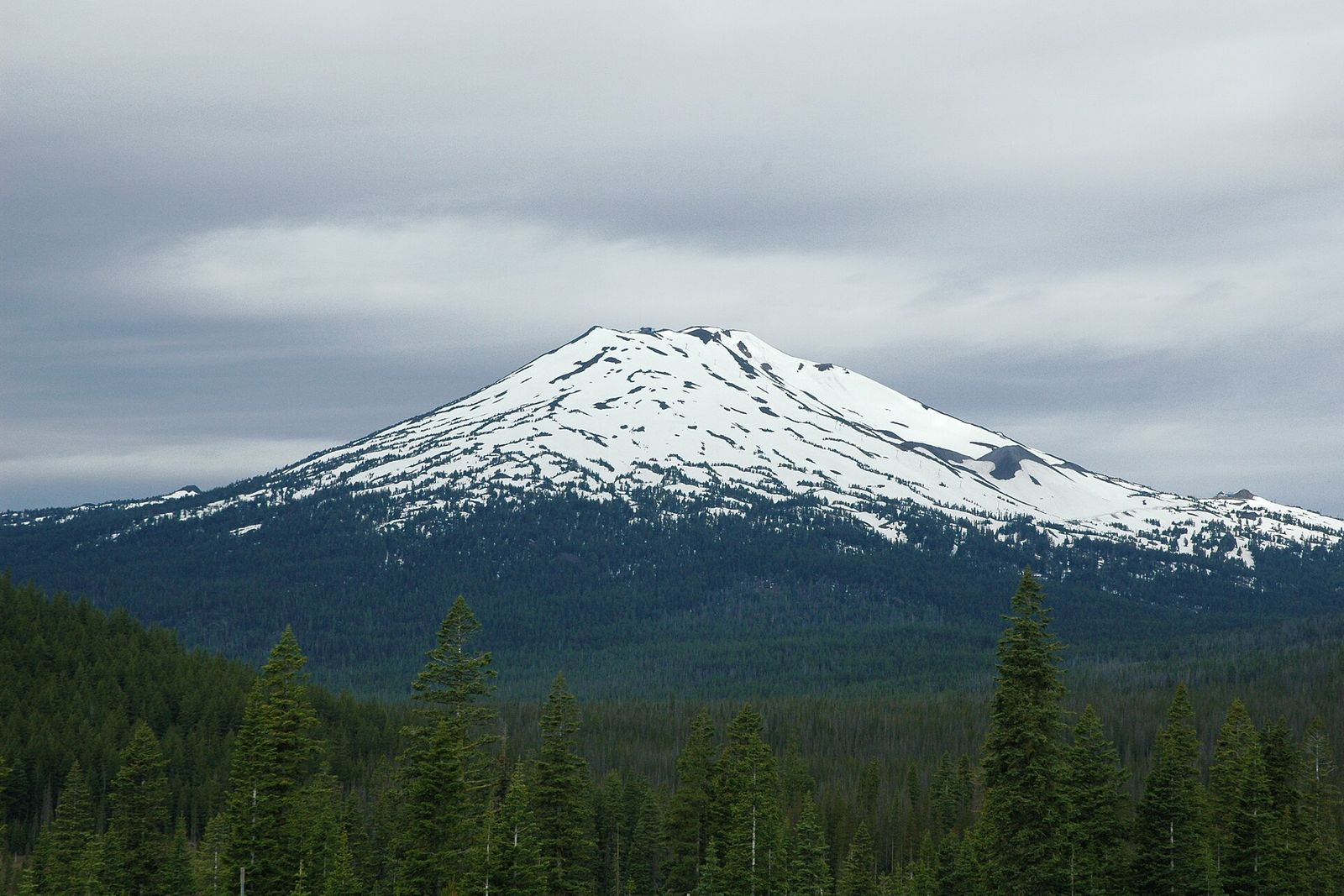
Sunriver in winter is a quiet, snowy base camp about 20 minutes from Mt. Bachelor, with cross-country ski trails, sledding hills, and a heated indoor pool all within easy reach. Spend the day on the snow, then come back to a private hot tub and a fire inside: that’s the whole winter formula here, and it’s a season our cabin handles beautifully.
This is the guide we’d hand you before a winter stay: how to get to the mountain, where to go if you don’t downhill ski, the parking permit trailheads require, and the driving advice we give every guest.
How far is Mt. Bachelor from Sunriver?
About 20 minutes by car in normal conditions. The most direct route leaves Sunriver on Forest Service Road 45 (locals just call it the 45 Road) and climbs through the forest to Century Drive, also known as the Cascade Lakes Highway, which takes you right up to the resort. Deschutes County maintains the 45 Road through winter, but it gets plowed after the busier Sunriver-area roads, so on the morning after a big storm, give yourself extra time. The fallback is the longer way around: north on US 97 to Bend, then west up Century Drive.
Parking: general parking in Mt. Bachelor’s West Village, Sunrise, and Skyliner lots is free and first-come, first-served. A limited number of premium spots close to the lifts can be reserved online for an extra fee; see Mt. Bachelor’s parking page for current details. On weekends and powder days, the early car gets the good spot.
Shuttles: the public ski bus (run by Cascades East Transit in partnership with the resort) runs between Bend and the mountain, not from Sunriver. Mt. Bachelor’s shuttle page has the details, but from Sunriver, driving is the practical choice.
What is skiing at Mt. Bachelor like?
Big. The summit sits at 9,065 feet, the resort covers more than 4,300 skiable acres, and when the Summit lift is running you can ski off the top in any direction, a full 360 degrees. The season is one of the longest in the country, typically running from late fall into late spring, weather permitting, so check the resort’s site for opening day if you’re planning an early-season trip.
A few practical notes:
- Buy lift tickets online, in advance. Mt. Bachelor says outright that buying online, ahead of time, gets the best price.
- Check your pass. Mt. Bachelor is an Ikon Pass destination, so pass holders should confirm their access before driving up.
- First-timers are covered. Lessons and rentals are available on the mountain, so nobody needs to own gear to try it.
If you’re planning around a ski week or a holiday break, check open dates at the cabin before you lock in lift tickets.
What can non-skiers do at Mt. Bachelor?
Not everyone in the group needs to ski for the mountain to be worth the drive. Mt. Bachelor’s winter activities include:
- Sled dog rides with Oregon Trail of Dreams, whose teams are led by professional mushers (the operation is run by Iditarod finisher Rachael Scdoris and her family). You ride bundled in the sled through snowy, tree-lined trails near the slopes.
- Free snowshoe tours led by the Forest Service, which double as a crash course on the mountain and the terrain around it.
- The Nordic Center, with signed snowshoe trails and rentals (more on that below).
One firm rule: sledding is not allowed anywhere at Mt. Bachelor, including the parking lots and lodge areas. Save the sleds for Wanoga (see below).
Where can you cross-country ski and snowshoe near Sunriver?
Start in Sunriver itself. When there’s snow on the ground, some of Sunriver’s paved paths are left unplowed, including the stretch along the Deschutes River, and they turn into easy, flat ski and snowshoe routes. Sunriver sits a little over 4,000 feet, far below the 9,065-foot summit, so conditions in town can differ from the mountain; ask what’s skiable that week. Village Bike & Ski in the Village rents Nordic skis and snowshoes.
Mt. Bachelor Nordic Center. For groomed trails, this is the big one: more than 50 kilometers groomed for classic and skate skiing, plus signed snowshoe trails, rentals, and lessons. The Nordic Lodge sits across from the West Village base area, and you’ll need a trail pass. See the Nordic Center overview for current conditions.
The Sno-Parks along Cascade Lakes Highway. West of Bend, on the way up to the mountain, two classics stand out:
- Virginia Meissner Sno-Park, about 15 miles west of Bend, has an extensive trail network that the volunteer Meissner Nordic club grooms from December through March. There’s no fee to use the trails (the club runs on donations), but you do need a Sno-Park permit to park.
- Swampy Lakes Sno-Park, about 17 miles west of Bend, offers ski and snowshoe loops and a warming hut. The Forest Service page has the trail details.
Traveling with your dog? Leave them home for these two. The Forest Service closes the areas reached from the Meissner, Swampy Lakes, Vista Butte, and Dutchman Sno-Parks to dogs from November 1 to May 1. Our pet-friendly Sunriver guide has winter paw-care tips for everywhere else.
Do you need a Sno-Park permit?
Yes, if you park at a designated Oregon Sno-Park between November 1 and April 30. It’s easy to miss if you’re new to Oregon. Sno-Parks are posted as winter recreation areas, and parking without a permit displayed in your windshield can get you a fine.
Permits come in daily, three-day, and annual versions, and you can buy them from permit agents (resorts, sporting goods stores, and other retailers) or online through Oregon DMV. California and Idaho Sno-Park permits are honored in Oregon too. Check current permit options and rates on the Oregon DMV page, and buy one before you drive up.
Where can you go sledding near Sunriver?
Wanoga Snow Play Area Sno-Park is the go-to. It sits along Cascade Lakes Highway about 15 miles west of Bend, with a designated sledding and snow play hill. Bring your own sleds or tubes, bring your Sno-Park permit, and know that dogs must stay leashed in the Sno-Park and on the sledding hill. It’s popular, so weekend mornings and school holidays fill up; midweek or early is calmer. The Forest Service page for Wanoga has the current rules.
What do you do in Sunriver when the weather turns?
Play the SHARC card. Sunriver’s aquatic and recreation center keeps its heated indoor pool open year-round (the outdoor side is summer-only): lap lanes, a whirlpool, a zero-entry shallow area with bubblers for little kids, and an adults-only hot tub for ages 16 and up. When it’s blowing sideways on the mountain, this is the save. Six SHARC passes come with our cabin, so the whole group gets in; here’s how the SHARC passes work. The SHARC runs on a seasonal schedule, so check current hours before you head over.
Go to the museum. The High Desert Museum is open year-round with shorter winter hours, and its live animals and indoor exhibits make an easy half day. It’s one of the spots in our local attractions guide.
Know what’s closed. A few summer favorites are off the table in winter. Lava River Cave is closed outside its summer season to protect bat habitat, and the Cascade Lakes Highway beyond Mt. Bachelor closes for the winter, so the mountain is as far west as that road takes you.
What’s the holiday season like in Sunriver?
Sunriver does the holidays well, and much of it happens in the Village.
- The Village’s holiday kickoff. The Village at Sunriver hosts an annual Rockin’ Holiday Kickoff around Thanksgiving weekend, with music, Santa photos, and the lighting of the Village Christmas tree. Dates shift each year, so check the Village calendar.
- Grand Illumination. Sunriver Resort’s free Grand Illumination in late November brings a tree lighting and fireworks, and it draws a big crowd.
- Ice skating in the Village. The Village has a seasonal outdoor ice rink, usually open from about November into April. It’s outdoors, so dress for it, and confirm session times before you go.
After skating, the Village is also where you’ll find dinner without getting back in the car; our eat and drink guide has the local picks.
What should you know about winter driving to Sunriver?
This is straight from the guidebook we send every guest. From November through March, treat the roads as mountain roads:
- Bring an AWD or 4WD vehicle if you can. We recommend it for every winter stay.
- Carry chains, even with all-wheel drive. Under Oregon’s chain law, the exemption for four-wheel and all-wheel drive passenger vehicles applies only if you’re carrying chains (along with the right tires). When signs say to carry chains or traction tires, you need them in the car.
- Check TripCheck before you leave. ODOT’s site shows road conditions, cameras, and chain requirements for the passes and highways between you and Sunriver.
- Put the Sno-Park permit in the windshield before any trailhead day.
- Plan your parking. The cabin has parking for three vehicles, including a covered carport that fits sedans and shorter vehicles (not SUVs), and Sunriver doesn’t allow street parking.
Our location page has the full getting-here rundown, from Redmond airport options to the drive from Portland.
Why our cabin works in winter
Winter is when the cabin’s best features earn their keep. The private hot tub runs all year, so every snow day can end in hot water. The gas fireplace takes the chill off with no wood to haul. Mt. Bachelor and Bend are each about 20 minutes away, the Village (rink, rentals, dinner) is a 3-minute walk, and the six SHARC passes cover the stormy days. The cabin sleeps six across two bedrooms and a loft, and your dog is welcome too, at $30 per dog per night. You can see the whole cabin here.
Ski days, snowshoe days, sled days, pool days: they all end in the same place. Check winter availability and book direct for the best rate on the same cabin you’ll find on the listing sites.